
The Card Room, In Person
The card room at Chance and Cinder is a real room at the back of the restaurant, past the last booth and the wood-fired oven. It is where the evening shifts from dinner to a slower, more deliberate kind of play—offline poker, always in person, always on-site.
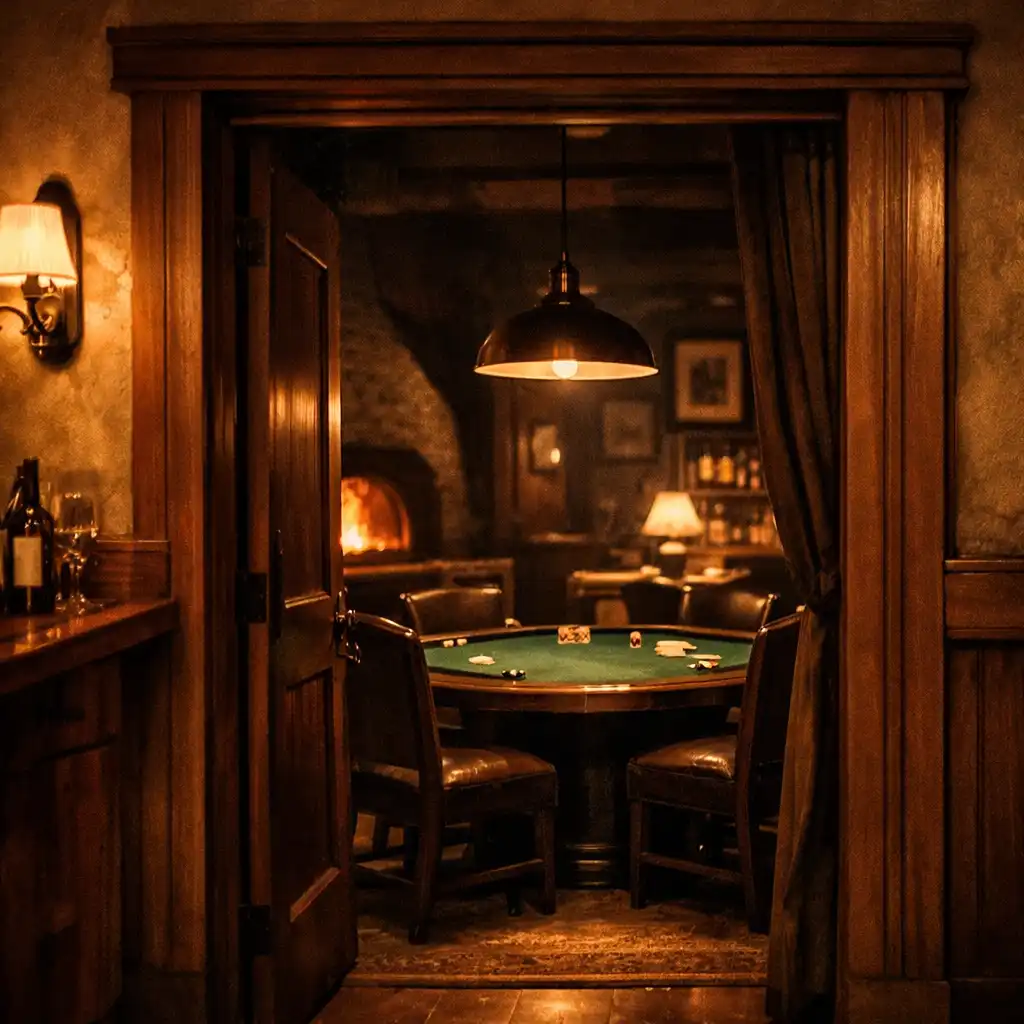
The room is reached through a short hallway lined with framed menus and old matchbooks. A heavy felt-topped table sits in the center, surrounded by mismatched chairs. The only light comes from a low pendant lamp and a few candles on the sideboard.
A Room for the Ritual
The card room exists because dinner and poker share the same rhythm: a slow build, a moment of tension, and a shared exhale. At Chance and Cinder, the card room is where that rhythm continues after the plates are cleared.
- The room is used for casual games and scheduled Texas Hold’em tournaments.
- It is open to restaurant patrons who want to play, not to outside gamblers.
- The buy-in is always a chips-only table allocation—no money changes hands at the table.
A Tuesday in the Card Room
The first hand of Texas Hold’em is dealt around nine, after the last dessert plates go back to the kitchen. The room smells like wood smoke and coffee. The chips click softly as players stack and restack them, a habit that fills the quiet between bets.
The tournament structure is simple: a fixed number of chips per player, no re-buys. The dealer is usually a staff member who also knows the menu by heart. Conversation drifts between the game and the food—someone always asks about the smoked lamb shoulder.
By the second blind level, the room has settled into its own tempo. Cards slide across the felt, chairs creak, and the low pendant lamp casts a warm circle over the table. It feels less like a game and more like a shared ritual that has always belonged here.
Snapshots from the Room
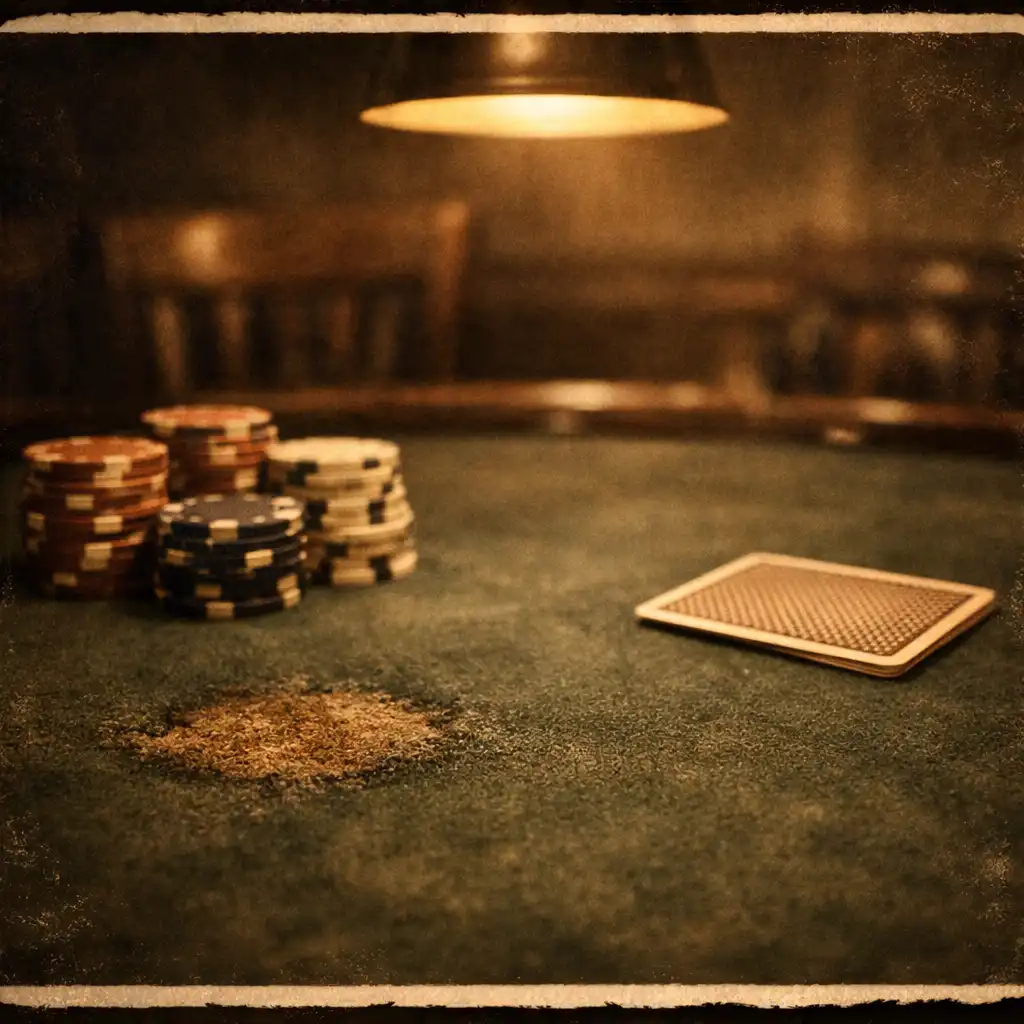
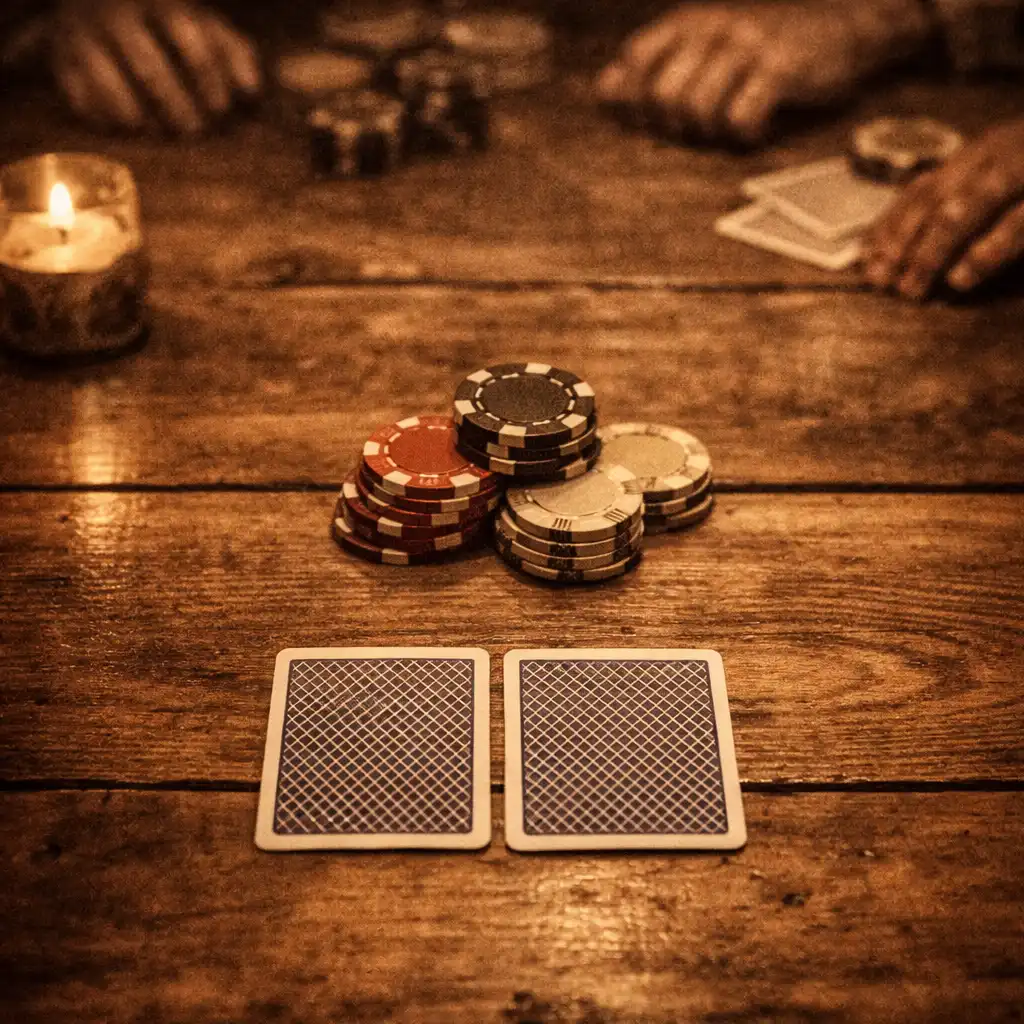
Three photos, each framed like a polaroid with a handwritten caption, capture the room’s texture: the felt table under low light, a close-up of chips and cards, and the wood-fired oven glowing in the background.
Tournament Nights, Typed Out
Every second Friday, the card room hosts a Texas Hold’em tournament. The structure is typed on a small card and pinned to the wall: 20 players maximum, 2,000 chips per player, 20-minute blind levels, and a break for dessert.
The buy-in is a chips-only table allocation—no money is exchanged. Players are seated by drawing cards from a deck. The tournament ends when one player holds all the chips, and the room applauds.
Next tournament: ask your server for the date.
High Rollers at the Table
In the card room, high rollers are not defined by the size of a bet but by the confidence of their play. They are the ones who stack chips in neat towers, who never look at their cards twice, and who always order the same dish before the game.
High rollers often arrive early to claim the seat facing the door. They tend to play fewer hands but play them aggressively. Their chip stacks are always the most organized, a habit that intimidates newcomers until they realize it is just a way of keeping the table tidy.
Dinner, Then the Deal
The card room is not separate from the dining experience; it is an extension of it. Many players order a final course to the table—a slice of wood-fired bread, a bowl of olives—and the game continues around the plates.
The kitchen keeps a small menu available for card room players until midnight. Finger foods are preferred because they do not interrupt the flow of the game. The smell of the wood-fired oven often drifts into the card room, a reminder of where you are.
The Room, Item by Item
- The table seats up to eight players.
- The felt is deep green, with a worn spot at the dealer’s position.
- The chairs are a mix of wooden dining chairs and two upholstered armchairs.
- A sideboard holds extra decks, chip trays, and a stack of paper napkins.
- The window is small and high, letting in a sliver of moonlight.
Pull Up a Chair
The card room is open to restaurant patrons most nights after 8pm. If you are curious, ask your server about the evening’s game. There is no need to be a high roller—just bring an appetite for dinner and a willingness to learn the rhythm of the table.
The card room is located at the back of the restaurant, past the wood-fired oven. Ask about the next Texas Hold’em tournament. The buy-in is a chips-only table allocation, so you can focus on the game.
A Note on the Room
The card room at Chance and Cinder is a space for offline poker only. Every game, tournament, and hand takes place in person at the restaurant. The buy-in is always a chips-only table allocation—no money, no wagering, no online play.
This page documents real evenings at the venue. The card room is not connected to any online gambling platform. Chips are used solely for table allocation and game play.